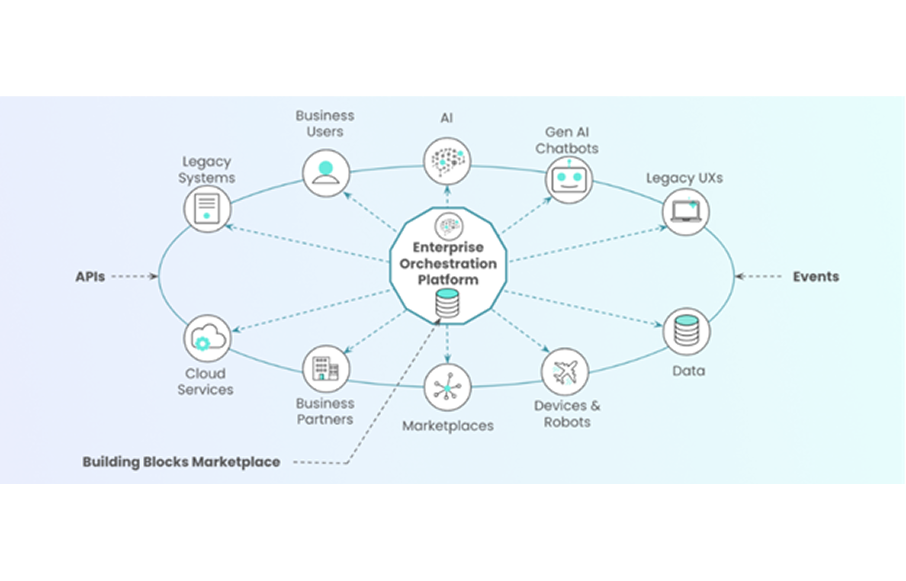

Agentic AI Solutions

From Assisted Intelligence to Autonomous Execution.

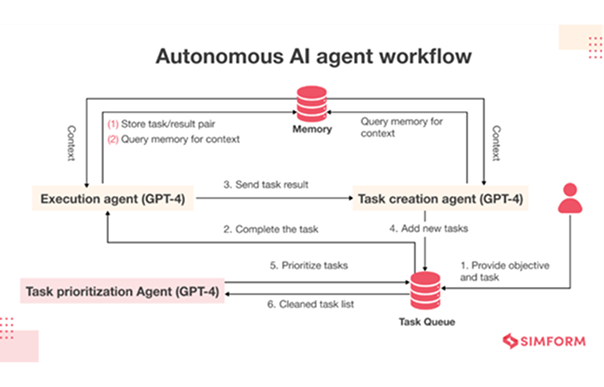
Snapnet helps organizations design, deploy, and govern Agentic AI systems—goal-driven, autonomous AI agents that plan, decide, and execute business processes across enterprise systems while operating within strict security, compliance, and governance guardrails.

Proven Impact

Snapnet RPA implementations consistently deliver

What This Means: Operations shift from manual execution to digital, scalable efficiency.

Process Cycle Time

40–70% reduction

Manual Intervention

Significant reduction

Operational Accuracy

Policy-consistent execution

Scalability

Linear growth without headcount

AI ROI

Faster move from pilot to production

Why Agentic AI Matters Now

Organizations face increasing operational complexity: too many systems, too many handoffs, manual decision bottlenecks, high operational cost and latency, AI pilots that never reach production.

Agentic AI enables organizations to move from human-dependent execution to AI-orchestrated operations—without sacrificing control. Snapnet ensures Agentic AI is intentional, governed, and business-aligned, not experimental.

Key business challenges and outcomes

Enterprise Challenge
How Snapnet Addresses It
Business Outcome
Manual decision bottlenecks
Autonomous decision agents
Faster execution
Fragmented workflows
Cross-system orchestration
End-to-end automation
High operational cost
Digital agents at scale
Lower cost-to-serve
Inconsistent execution
Policy-driven AI agents
Predictable outcomes
AI stuck in pilots
Production-grade agents
Real ROI

Enterprise Use Cases

Finance & CFO Operations

Agent Scenarios:

Outcomes: Faster close cycles and improved financial control

Procurement

Agent Scenarios:

Outcomes: Reduced delays and optimized working capital

Human Resources

Agent Scenarios:

Outcomes: Faster HR processes and consistent policy enforcement

Service Operations

Agent Scenarios:

Outcomes: Improved uptime and reduced support workload

Public Sector

Agent Scenarios:

Outcomes: Improved transparency and service delivery

Industry Use Cases

Financial Services

Agent Scenarios:

Outcomes: Faster close cycles and improved financial control

Procurement

Agent Scenarios:

Outcomes: Reduced delays and optimized working capital

Human Resources (HR)

Agent Scenarios:

Outcomes: Faster HR processes and consistent policy enforcement

Service Operations

Agent Scenarios:

Outcomes: Improved uptime and reduced support workload

Public Sector

Agent Scenarios:

Outcomes: Improved transparency and service delivery

Goal-Oriented AI Agents

Agents are designed to achieve defined business outcomes—not just answer questions.

Outcome: AI that delivers results, not suggestions.

Multi-Agent Collaboration

Multiple specialized agents (Finance, HR, Compliance, Operations) work together—each with a clear role.

Outcome: Complex processes handled intelligently and at scale.

Autonomous Decision-Making (With Guardrails)

Agents make decisions based on policies, thresholds, and rules—with human escalation where required.

Outcome: Speed without loss of control.

System-Orchestrated Execution

Agents execute actions across ERP, CRM, HR, Data Platforms, and legacy systems.

Outcome: True end-to-end process automation.

Continuous Learning & Optimization

Agents improve over time based on outcomes, feedback, and data.

Outcome: Increasing efficiency and intelligence.

Best Fit Organizations

Mid-to-large enterprises

Public sector and regulated institutions

Organizations already using ERP, CRM, RPA, or Copilot

Operations-heavy environments

Best Fit Scenarios

High-volume, repeatable decision workflows

Complex cross-system processes

AI initiatives stuck at pilot stage

Need for faster execution without risk

May Not Be the Best Fit If

Data and process foundations are immature

No governance or process ownership exists

AI is viewed purely as experimentation

Snapnet may recommend data, analytics, or RPA foundations first.

Free resources

Agentic AI Playbook for Enterprises

How to design, govern, and scale autonomous AI safely.

Agentic AI Readiness & Governance Checklist

Assess your readiness for autonomous AI execution.

Case Study: Autonomous Operations with Agentic AI

How Snapnet helped an organization reduce cycle time and manual effort.

Frequently asked questions

Yes—when deployed with governance, approvals, and audit controls, Agentic AI is suitable for regulated environments.
No. Agentic AI augments human teams by handling execution, while humans retain oversight and decision authority.
Initial use cases can go live in 6–12 weeks, depending on complexity.
Yes. Snapnet uses APIs and RPA to integrate agents with legacy platforms.
Absolutely. Continuous monitoring and optimization are core to our Agentic AI offering.